
Living Donor Liver Transplantation in Ahmedabad

Understanding Living Donor Liver Transplantation

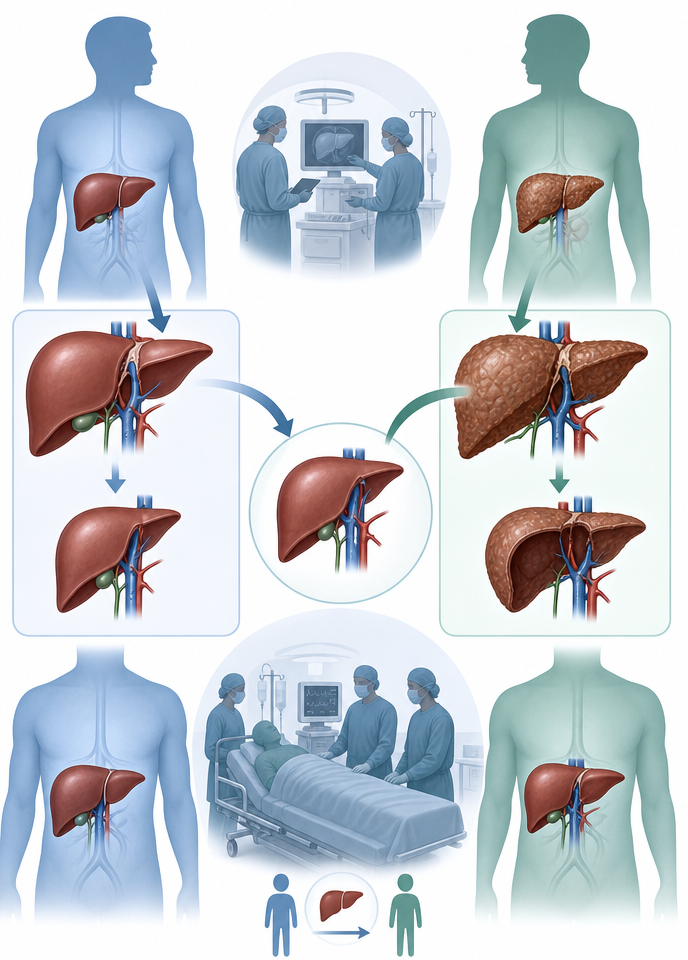
When the liver reaches a stage where it can no longer support the body adequately, liver transplantation may offer a way forward. In a living donor liver transplant, a healthy portion of the liver from a suitable donor is transplanted into the recipient. Because the liver has the ability to regenerate, both the donor’s remaining liver and the transplanted portion can grow over time.

For families considering Living Donor Liver Transplantation, the decision involves much more than the transplant procedure itself. Donor suitability, recipient condition, liver anatomy, timing, surgical planning and post-transplant care all need to be evaluated carefully.

Donor Suitability

A potential donor undergoes detailed medical, blood group, imaging and anatomical evaluation to determine whether donation can be performed safely.

Recipient Assessment

The recipient is evaluated for liver disease severity, overall health and transplant-related factors before the team plans the most appropriate transplant approach.

Careful Surgical Planning

Donor and recipient anatomy, graft size, blood vessels and bile ducts are assessed carefully to plan the transplant while keeping donor safety central to the process.

Gujarat’s First Board-Certified (NMC) Hepatobiliary & Liver Transplant Surgeon

Dr. Ankur Vagadiya is a Consultant in Gastro Surgery and Liver Transplantation with 12+ years of experience in complex hepatobiliary surgery and liver transplantation. He has completed super-specialty training in hepatobiliary and liver transplantation at the Institute of Liver and Biliary Sciences (ILBS), New Delhi. His transplant experience includes 550+ living donor liver transplants and 150+ deceased donor liver transplants during his training at ILBS. His work has also included research related to donor safety, recipient outcomes and transplant immunology.

SIGNS

When Is Living Donor Liver Transplantation Considered?

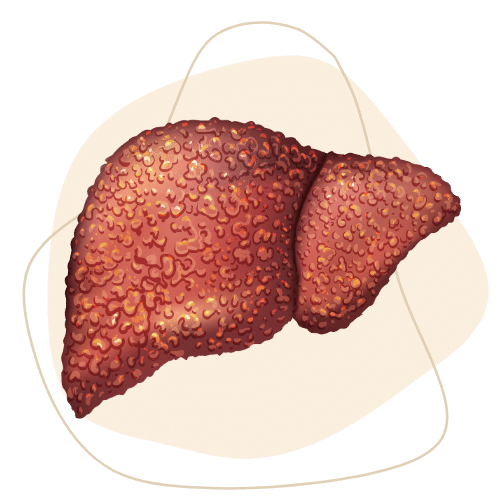
Living donor liver transplantation may be considered when advanced liver disease has significantly affected liver function or when the liver can no longer adequately support the body. The underlying condition, disease severity and overall health are assessed to determine whether transplantation may be appropriate. Then your pointers can follow:

What Living Donor Liver Transplantation Involves

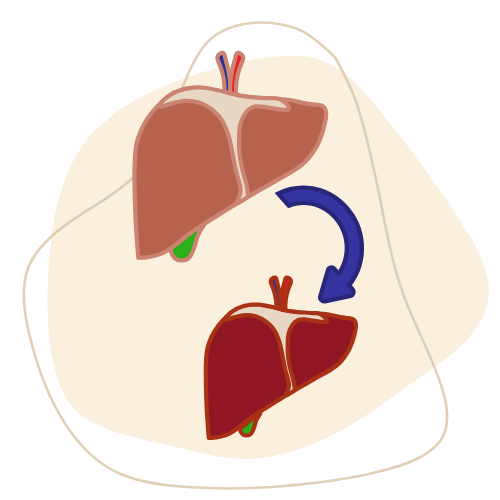
A living donor liver transplant uses a portion of the liver from a carefully evaluated living donor. The diseased liver of the recipient is removed, and the donor liver portion is placed in its position.

The procedure involves several important surgical steps:

  • Donor assessment: Detailed medical, blood group, imaging and anatomical evaluation is performed.
  • Liver portion selection: The surgical team determines the appropriate liver portion based on donor and recipient requirements.
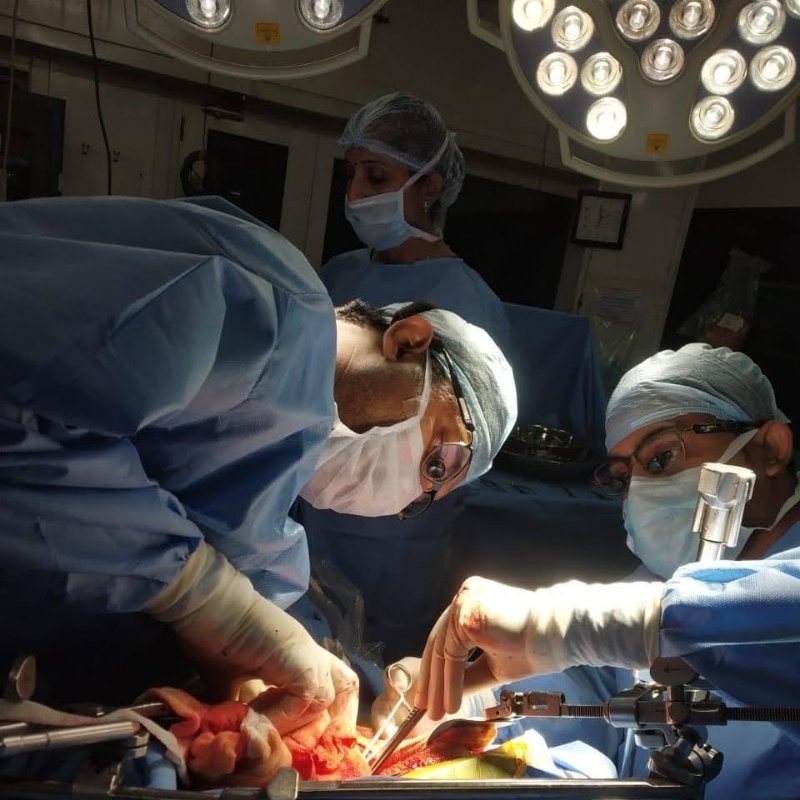
  • Recipient surgery: The diseased liver is removed and the donor graft is implanted.
  • Vascular connections: The blood vessels of the donor graft are connected to the recipient’s circulation.
  • Bile duct reconstruction: The bile drainage pathway is reconstructed according to the recipient’s anatomy.
  • Post-transplant monitoring: The recipient and donor are closely monitored during recovery.

The liver’s regenerative capacity allows the remaining donor liver and transplanted liver portion to increase in volume after surgery.

Why a Living Donor Can Make a Difference

One of the important advantages of living donor transplantation is that the transplant can be planned around the donor and recipient after completing the required evaluation. Depending on the clinical situation, this may help avoid waiting indefinitely for a deceased donor organ. It also allows the transplant team to assess the donor’s anatomy and the graft before proceeding.

However, living donor transplantation is a major operation for both individuals. The donor’s safety remains an essential part of the evaluation, and donation is considered only when the medical and surgical assessment indicates that it can be performed appropriately.

The Journey From Donor Evaluation to Transplant

A successful transplant begins well before entering the operating room.

1

Donor Evaluation

Assessing health and donation suitability.

2

Recipient Assessment

Evaluating liver disease and transplant needs.

3

Graft & Surgical Planning

Planning graft size and surgical approach.

4

Transplant & Recovery

Performing transplantation and monitoring recovery.

12+

Years of

Experience

Why Choose Dr. Ankur for Liver Transplantation?

Dr. Ankur Vagadiya has trained and worked extensively in hepatobiliary surgery and liver transplantation. His super-specialty training at ILBS included major liver resections, surgery for liver and gallbladder cancers, pancreatic surgery and liver transplantation.

His experience includes:

650+ living donor liver transplants

Extensive experience in living donor transplantation.
200+ deceased donor liver transplants

Experience across deceased donor transplantation.

700+ major hepatobiliary surgeries

Extensive exposure to complex liver procedures.

Experience in acute and high-urgency liver failure

Experience managing high-urgency liver failure cases.

Transplant Research Experience

Research focused on transplantation and outcomes.

Frequently Asked Questions

A potential donor must undergo extensive medical and anatomical evaluation before donation. Donation is considered only when the assessment indicates that the person can safely undergo the operation and retain adequate liver function.

No. Transplantation depends on the underlying liver condition, disease severity, overall health and transplant-specific factors. The transplant team determines whether transplantation is appropriate after a detailed evaluation.

The liver has a strong regenerative capacity, and both the donor’s remaining liver and the transplanted portion increase in volume after surgery. The exact recovery varies between individuals.

It is a major surgical procedure and carries risks for both donor & recipient. Careful donor selection,  anatomical assessment, experienced surgical planning and close postoperative monitoring are important parts of reducing these risks.

Living donor transplantation uses a portion of the liver from a suitable living donor, while deceased donor transplantation uses a liver or liver portion donated after death. The choice depends on availability, medical suitability and transplant circumstances.

Recovery varies according to the patient’s health, the complexity of surgery and postoperative progress. The recipient also requires long-term medical follow-up and anti-rejection medicines.

Consult Dr. Ankur Vagadiya for Liver Transplantation in Ahmedabad.

If you or your family member has been advised to consider Living Donor Liver Transplantation, a specialist transplant evaluation can help you understand whether transplantation is appropriate and what the next steps may involve.

Scroll to Top