
Deceased Donor Liver Transplantation in Ahmedabad
Understanding Deceased Donor Liver Transplantation
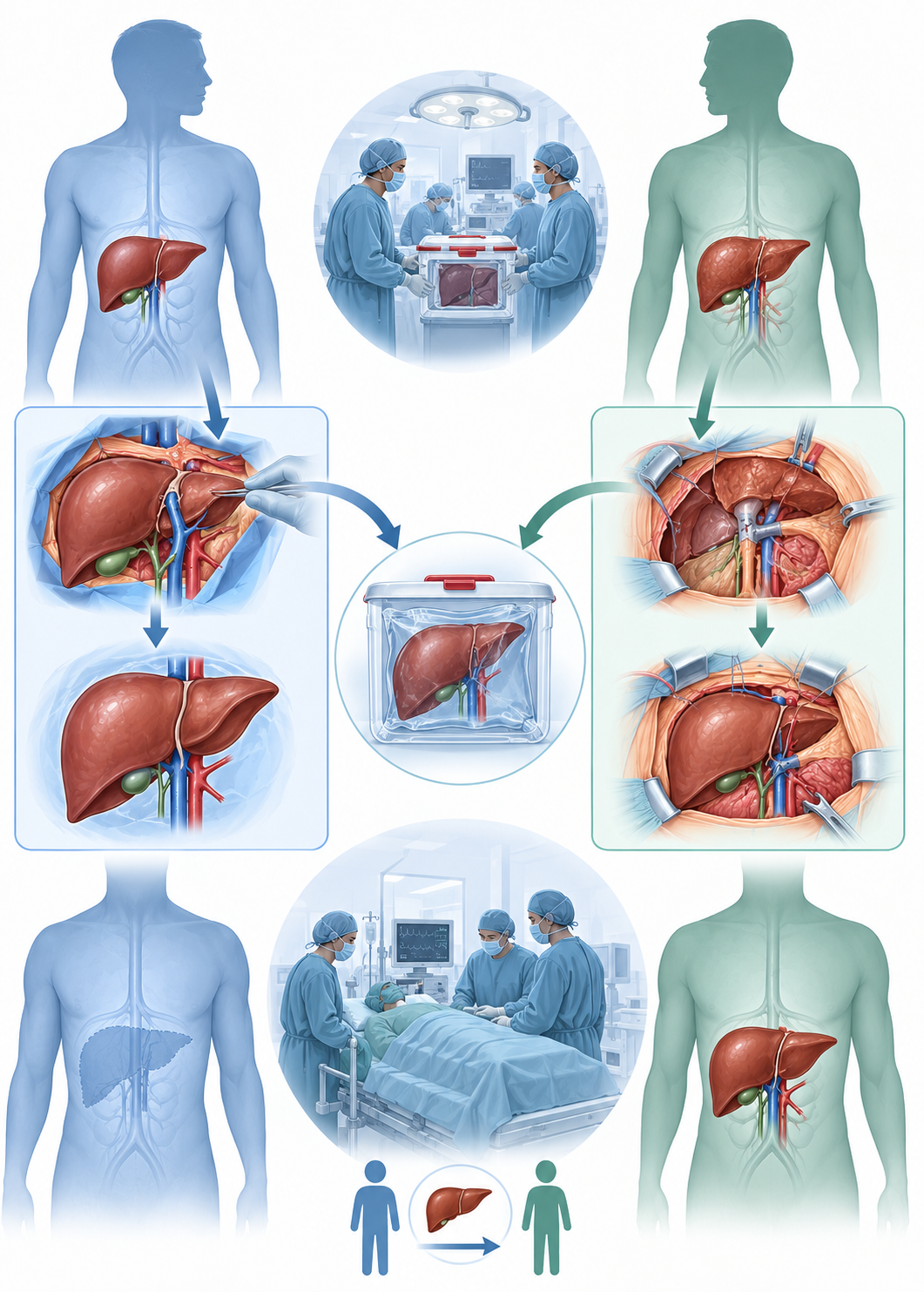
When the liver reaches a stage where it can no longer support the body adequately, liver transplantation may offer a way forward. In deceased donor liver transplantation, a liver from a deceased person who has donated their organs is transplanted into a suitable recipient. The procedure requires careful evaluation, organ allocation, surgical planning and long-term medical follow-up.
For patients considering Deceased Donor Liver Transplantation, the process involves more than the surgery itself. Liver disease severity, transplant eligibility, donor organ suitability, clinical urgency and postoperative care all play an important role in determining the appropriate course of treatment.

Recipient Evaluation
The patient’s liver function, disease severity and overall health are assessed to determine transplant eligibility.

Donor Organ Assessment
The available donor liver is evaluated for suitability based on medical and surgical requirements.

Transplant Planning
The transplant team coordinates organ allocation, surgical preparation and postoperative care.
Gujarat’s First Board-Certified (NMC) Hepatobiliary & Liver Transplant Surgeon
Dr. Ankur Vagadiya is a Consultant in Gastro Surgery and Liver Transplantation with 12+ years of experience in hepatobiliary surgery and liver transplantation. He completed his MCh super-specialty training at the Institute of Liver and Biliary Sciences (ILBS), New Delhi, where he gained experience in both living and deceased donor liver transplantation. His clinical expertise includes complex liver surgery, acute liver failure and high-urgency liver transplantation.
His experience includes 200+ deceased donor liver transplants, alongside extensive work in living donor transplantation, major hepatobiliary surgery and transplant-related research.
SIGNS
When Is Deceased Donor Liver Transplantation Considered?
Deceased donor liver transplantation may be considered when severe liver disease significantly affects liver function or creates a risk of life-threatening complications. The decision depends on the underlying condition, clinical urgency, overall health and transplant eligibility.

End-Stage Liver Disease

Decompensated Cirrhosis

Acute Liver Failure
Selected Liver Cancers

Advanced Chronic Liver Disease
Deceased donor liver transplantation involves replacing the recipient’s diseased liver with a suitable donated liver. The procedure requires coordination between the transplant team, organ allocation system and surgical unit.
The process generally includes:
- Recipient Evaluation: Assessing liver disease, overall health and transplant eligibility.
- Waiting List Registration: Completing the required assessment and transplant registration.
- Organ Allocation: Identifying an available liver through the applicable allocation system.
- Donor Liver Assessment: Reviewing organ suitability and recipient compatibility.
- Transplant Surgery: Removing the diseased liver and implanting the donor liver.
- Post-Transplant Monitoring: Tracking liver function, recovery and possible complications.
Organ availability and allocation depend on the applicable rules, clinical urgency and the suitability of the available organ.
Why a Deceased Donor Liver Can Make a Difference
Deceased donor liver transplantation provides an option for eligible patients who do not have a suitable living donor or whose transplant plan involves a deceased donor organ. It can also provide access to a whole donated liver, depending on the organ available and the transplant team’s assessment.
The process depends on organ donation, allocation and recipient suitability. Since donor organs are limited, patients may need to remain on a waiting list while their condition is monitored. The transplant team reviews their clinical status and explains the relevant allocation process.
The Journey From Evaluation to Transplant
A successful transplant requires careful coordination at every stage.
1
Recipient Evaluation
Assessing liver disease and transplant suitability.
2
Waiting List Registration
Completing eligibility checks and required registration.
3
Donor Liver Matching
Assessing organ suitability and allocation.
4
Transplant & Recovery
Performing surgery and monitoring liver function.
12+
Years of
Experience
Why Choose Dr. Ankur for Deceased Donor Liver Transplantation?
Dr. Ankur Vagadiya has specialist training in liver transplantation, including deceased donor procedures and the management of complex liver conditions. His experience in acute liver failure, transplant surgery and hepatobiliary procedures supports the evaluation and surgical management of patients who may require a liver transplant.
His experience includes:

200+ deceased donor liver transplants
Experience across deceased donor transplantation.

650+ living donor liver transplants
Extensive experience in living donor transplantation.

700+ major hepatobiliary surgeries
Extensive exposure to complex liver procedures.

Experience in acute and high-urgency liver failure
Experience managing high-urgency liver failure cases.

Transplant Research Experience
Research focused on transplantation and outcomes.
Frequently Asked Questions
Who may need a deceased donor liver transplant?
It may be considered for selected patients with end-stage liver disease, decompensated cirrhosis, acute liver failure or certain liver cancers. Eligibility depends on a detailed specialist assessment.
How is a deceased donor liver allocated?
Allocation follows the applicable transplant system and considers factors such as clinical urgency, recipient eligibility, compatibility and organ suitability. The transplant centre can explain the relevant process.
How long does the waiting period for a donor liver last?
Waiting time varies according to organ availability, clinical urgency, compatibility and allocation requirements. A specific waiting period cannot be guaranteed.
What care is needed after a liver transplant?
Recipients require regular medical reviews, blood tests & medicines to reduce the risk of organ rejection. Follow-up also helps identify complications & monitor long-term liver function.
Is deceased donor liver transplant a major surgery?
Yes. It is a complex operation requiring specialist surgical care, anaesthesia, postoperative monitoring and long-term medical follow-up.
Can family members help during the waiting period?
Yes. Family members can help the patient attend appointments, follow medical advice, maintain records and communicate changes in health to the transplant team.
Consult Dr. Ankur Vagadiya for Liver Transplantation in Ahmedabad.
If you or a family member has been advised to consider Deceased Donor Liver Transplantation, a specialist evaluation can help clarify transplant eligibility, waiting-list procedures and the next steps in treatment.